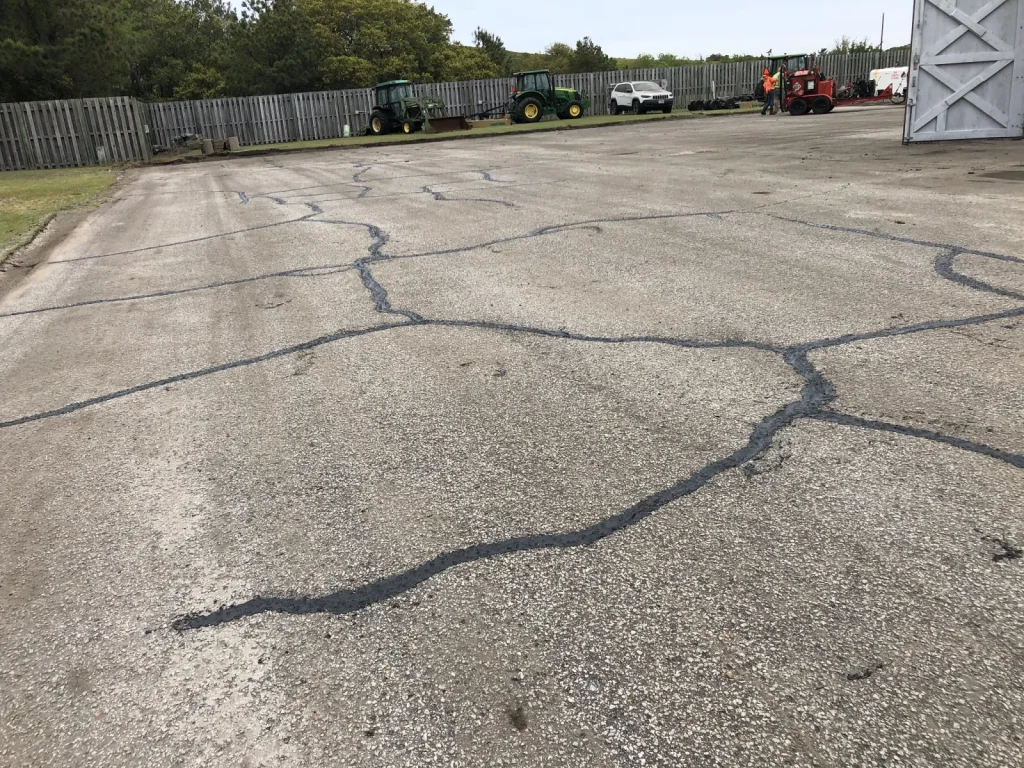
Asphalt crack repair in San Antonio usually means crack sealing: cleaning out each crack and filling it with hot-pour rubberized sealant that stretches as the pavement moves. Sealing cracks early stops rain and sprinkler water from soaking into the base, which is the main cause of potholes and alligator cracking. It’s one of the cheapest ways to add years to a driveway or parking lot.
San Antonio pavement cracks for local reasons: expansive clay that swells and shrinks, summer heat that dries out the asphalt, and heavy storms that push water into every opening. Asphalt Paving San Antonio seals cracks on residential driveways, parking lots, private roads and HOA streets across Bexar County.
Why Sealing Cracks Matters
A crack on its own looks harmless. The problem is what comes through it:
- Water gets into the crack after rain or sprinklers.
- It soaks into the base under the asphalt and softens it.
- Traffic pushes down on the weak spot, and the base starts to fail.
- The crack spreads into alligator cracking, then breaks out into a pothole.
Sealing a crack early costs a few dollars per foot. Fixing the pothole it turns into can cost hundreds or thousands. That’s why we recommend sealcoating only after cracks are sealed, and why every sealcoat job we do starts with crack filling.
Types of Cracks We Seal
| Crack type | What it looks like | What we do |
|---|---|---|
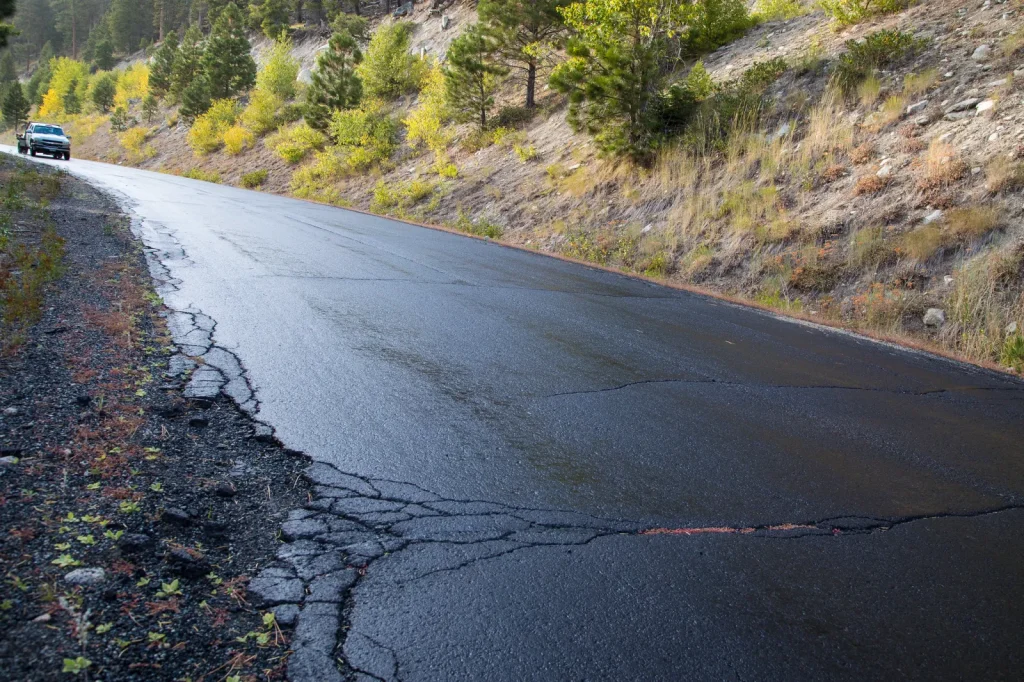
| Longitudinal cracks | Long cracks running in the direction of traffic | Clean and seal |
| Transverse cracks | Cracks running across the pavement | Clean and seal |
| Edge cracks | Cracks along driveway or road edges, common on clay soil | Seal; repair edge if broken |
| Block cracks | Large rectangular pattern from aging asphalt | Seal; plan for sealcoat or overlay |
| Reflective cracks | Old cracks showing through an overlay | Seal |
| Alligator cracking | Small connected cracks like reptile skin | Not a crack seal job. The base has failed. Needs asphalt repair |
Crack size matters: crack sealing works best on cracks about 1/4 inch to 1 inch wide. Hairline cracks are usually handled by sealcoat. Cracks wider than about 1 inch, or cracks with sunken edges, need patching first.
Crack Sealing vs. Crack Filling
People use these words to mean the same thing, but there’s a difference:
- Crack sealing: a flexible, rubberized hot-pour sealant placed into “working” cracks that open and close as the pavement moves with heat and soil. Lasts longer.
- Crack filling: a cheaper, less flexible material for cracks that don’t move much. Shorter life.
In San Antonio, most cracks move with the clay soil and big temperature swings, so we use hot-pour rubberized crack sealant on almost every job.
Our Crack Sealing Process
- Inspect. We walk the pavement, mark the cracks and check for areas that need patching instead.
- Clean. We blow out dirt, weeds and loose material with high-pressure air. Wide or uneven cracks may be routed first to create a clean channel.
- Dry. Sealant only bonds to dry pavement, so we work after the surface has dried from any rain.
- Seal. We apply hot-pour rubberized sealant from a heated melter, filling each crack and finishing it flush or with a light band over the top.
- Cure. Hot-pour sealant cools and sets quickly, often within 30 to 60 minutes. A light dusting can be added so tires don’t track it.
We'll walk your pavement, measure the cracks and give you a written quote. Mon–Sat: 7:00 AM – 6:00 PM.
Best Time to Seal Cracks in San Antonio
Cracks are widest in cooler weather, when asphalt shrinks. Sealing in fall, winter and early spring fills the crack at its widest, so the seal holds better when summer heat makes the pavement expand. Crack sealing can be done most of the year in San Antonio, as long as the pavement is dry and it isn’t too cold or about to rain.
Crack Sealing Cost in San Antonio
| Project | Typical price range |
|---|---|
| Crack sealing (hot-pour rubberized) | $1 – $3 per linear foot |
| Routing wide or uneven cracks (added) | $0.50 – $1.50 per linear foot |
| Typical residential driveway | $150 – $500 |
| Crack sealing + sealcoating package | Priced together, lower per sq ft |
| Minimum job charge | $250 – $400 |
Estimated 2026 ranges for the San Antonio area, not a quote.
The price mostly depends on the total length of cracks, their width, and whether routing or edge repair is needed. Combining crack sealing with sealcoating and parking lot striping in one visit saves on mobilization. See the asphalt paving cost guide for other prices.
For Homeowners and Property Managers
- Driveways: sealing cracks every year or two, plus a sealcoat every 2–3 years, can help a driveway reach 15–20 years or more.
- Parking lots and HOA roads: we can set up a yearly crack sealing plan so small cracks never reach the base. It fits easily into a reserve budget and keeps big repair bills away.
Asphalt Crack Repair FAQs
Is crack sealing worth it?
Yes, for pavement that’s still structurally sound. Crack sealing costs a few dollars per foot and keeps water out of the base, which prevents potholes and alligator cracking that cost far more to repair. It’s one of the best-value maintenance steps for asphalt.
How long does crack sealing last?
Hot-pour rubberized crack sealant usually lasts about 2 to 5 years, depending on traffic, sun and how much the pavement moves. New cracks form over time, so most properties seal cracks every 1 to 2 years.
Can I seal driveway cracks myself?
You can buy pour-in filler at a hardware store, but it usually doesn’t bond or stretch like professional hot-pour sealant, so it often pulls loose after a few months in Texas heat. For wide or many cracks, a professional seal lasts much longer.
Should cracks be sealed before sealcoating?
Always. Sealcoat is a thin coating and won’t fill or seal cracks. Cracks must be cleaned and sealed first, then the sealcoat goes over the top.
Why does my driveway keep cracking?
In San Antonio, the most common causes are expansive clay soil that swells and shrinks, sun and heat drying out the asphalt, water getting under the edges, and tree roots. Sealing cracks early and keeping water away from the edges slows it down.
What if my cracks look like alligator skin?
That pattern means the base under the asphalt has weakened, so crack sealing won’t fix it. The damaged area needs to be cut out and replaced. See our asphalt repair service.